Farmhand
Scan a crop. Get answers.
Photograph the crop and Farmhand analyses it — what is likely wrong, how confident it is in each finding, what would confirm it, and what to do. It follows the integrated pest management practice the extension service has taught for a century.
How it works
1. Scan
Photograph the affected plant and a healthy one beside it, close up and from a distance. Add the crop, when you first noticed it, how much is affected, and anything already applied — each of those narrows the analysis.
2. Analysis and report
What is visible, then the likely causes ranked with a confidence figure on each, and the checks that would tell them apart. Written against the pest and disease pressures of the Gulf Coast rather than agriculture in general.
3. What to do
Scouting before spraying, cultural and biological measures ahead of chemical ones — integrated pest management, as the extension service has taught it since 1914. An advisor picks up anything inconclusive, or touching a reportable disease or a restricted product.
Photographs that work
- Daylight, in focus, close enough to fill the frame.
- Photograph the affected part and a healthy one beside it.
- Take a close-up and a wider shot of the same plant.
- Include the underside of a leaf — a lot hides there.
- Say what each photograph is of. It changes what it is evidence of.
What a report looks like
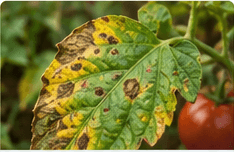
An example, not a real scan
A scan of a leaf like this would report the lesion pattern and the yellowing around it, rank early blight above the alternatives with the confidence behind that ranking, and name the checks that separate it from the others — whether the lowest leaves went first, and whether the spots have concentric rings. Then what to do: remove affected leaves, improve airflow, stop overhead watering. Chemical measures only after those, and never with a rate or an interval, because those come from the product label.
What the scanner will not do
- Tell you a product is safe or legal for your crop. That is on the label, and the label is the law.
- Say whether you are compliant with anything. We are not a regulator.
- Claim certainty. Every finding carries the confidence behind it, and you can see when it is low.
- Keep your photographs public. They are private to your scan and served only through expiring links.
Healthier plants. Stronger harvests.
Catch it early, know how sure the answer is, and know what to check before you spend anything.